
Most portable cabin problems do not start in the factory. They start on the ground the cabin is placed on. A good cabin sitting on soft soil will sag at a corner within one monsoon; the same cabin on a level plinth will still be square after a decade. Getting portable cabin installation right is mostly about what you do before the truck arrives.
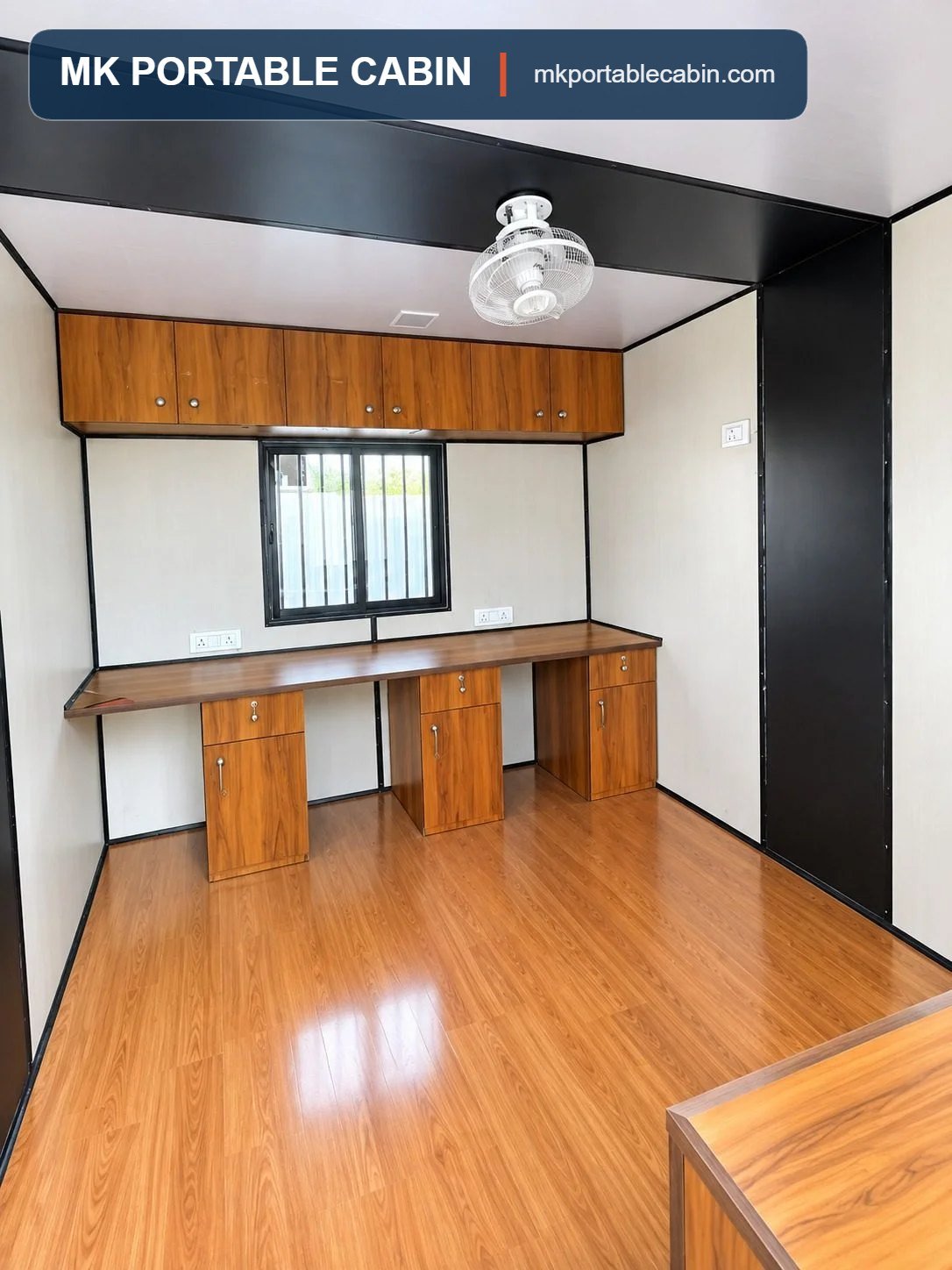
Here is what to prepare, in the order it matters.
1. Level the ground and raise it
The base has to be flat and slightly above the surrounding ground so rain water runs away from the cabin rather than under it. Three common bases, in increasing order of cost and life:
- Compacted murum or gravel bed with the cabin resting on concrete blocks or ISMC channels at the corners and mid-points. Fine for short projects.
- Concrete pads at each support point — the usual choice for a site office that will stay a year or more.
- Full PCC plinth raised 150 to 300 mm above ground. Best for permanent placement: society gate, factory, warehouse, farmhouse.
Whatever you choose, the support points must be at the same level. A single low corner is what twists a door frame.
2. Plan for water
Standing water at the base is the fastest way to shorten a cabin’s life. Before delivery, look at where water goes during heavy rain and make sure the cabin is not sitting in that path. If the site slopes towards the cabin position, cut a shallow drain on the uphill side. Never place a cabin directly on bare soil in a low spot.
3. Check truck access before the day of delivery
This is the most common cause of a failed delivery. Walk the route from the main road to the placement point and note:
- Gate width and height
- Tight turns the truck must take
- Low-hanging electrical cables or tree branches
- Whether the ground will take a loaded truck in wet weather
- Space to park a crane or hydra beside the placement point
- Any society or authority permission needed for a large vehicle
Tell your supplier what you find. A cabin that has to be craned over a wall is a different job from one that can be rolled off beside the truck, and it is far better known in advance than discovered on delivery morning.
4. Arrange the unloading equipment
Small cabins can be unloaded with manual labour and rollers. Larger units need a hydra or a crane of the right capacity. Confirm who is arranging it — you or the supplier — and confirm it in writing, because a truck waiting at site is a cost that grows by the hour.
5. Get power and water to the position
Decide where the electrical connection will come from and run a point to the cabin position before it arrives. Same for water and drainage if the cabin includes a toilet or pantry. Doing this after the cabin is placed usually means digging around it or running cables across a walkway.
6. Fix the cabin down
An empty portable cabin is light for its size and can move in a strong wind, particularly on an open site or a rooftop. Anchoring to the plinth or to concrete pads with base plates and bolts takes an hour and removes the risk entirely.
7. Check these things before you sign the delivery
- All four corners level; doors and windows open and close freely
- Roof joints sealed, no visible gaps at panel joins
- Electrical points working and earthing connected
- Toilet and pantry connections not leaking
- No dents or scratches on panels beyond what is acceptable to you
- Anchoring complete
Ongoing maintenance is short
A cabin needs very little once installed. Once a year: check and re-do roof and joint sealant before the monsoon, clear the drainage around the base, touch up any paint where the coating is damaged, and check the anchoring bolts. Ten minutes of attention a year adds years of life.
If you are still deciding on size and specification, our comparison with traditional construction and the complete portable cabin guide cover those steps.
MK Portable Cabin manufactures office cabins, security cabins, site cabins, shop cabins, container cabins and portable toilets, and has delivered to 300+ clients across India.
Share your site details and delivery PIN code for a quotation