
If you run a construction business, manage an industrial site, or need a quick, durable workspace without the wait of traditional construction, you’ve probably come across the term “portable cabin.” But what exactly makes a good one — and how do you avoid ending up with a flimsy structure that doesn’t survive its first monsoon?
This guide covers everything: what portable cabins are, the different types available, what actually goes into a well-built one, how pricing works, and a practical checklist for choosing the right manufacturer.
What Is a Portable Cabin?
A portable cabin (also called a prefab cabin or modular cabin) is a factory-built structure that’s manufactured off-site and delivered ready to use — or assembled on-site in a fraction of the time traditional construction takes. Instead of waiting weeks or months for brick-and-mortar construction, businesses get a fully functional space in days.
They’re used everywhere: construction sites need site offices and labour accommodation, factories need security cabins at their gates, schools use them as extra classrooms, and landowners use them as weekend homes or farmhouse stays.
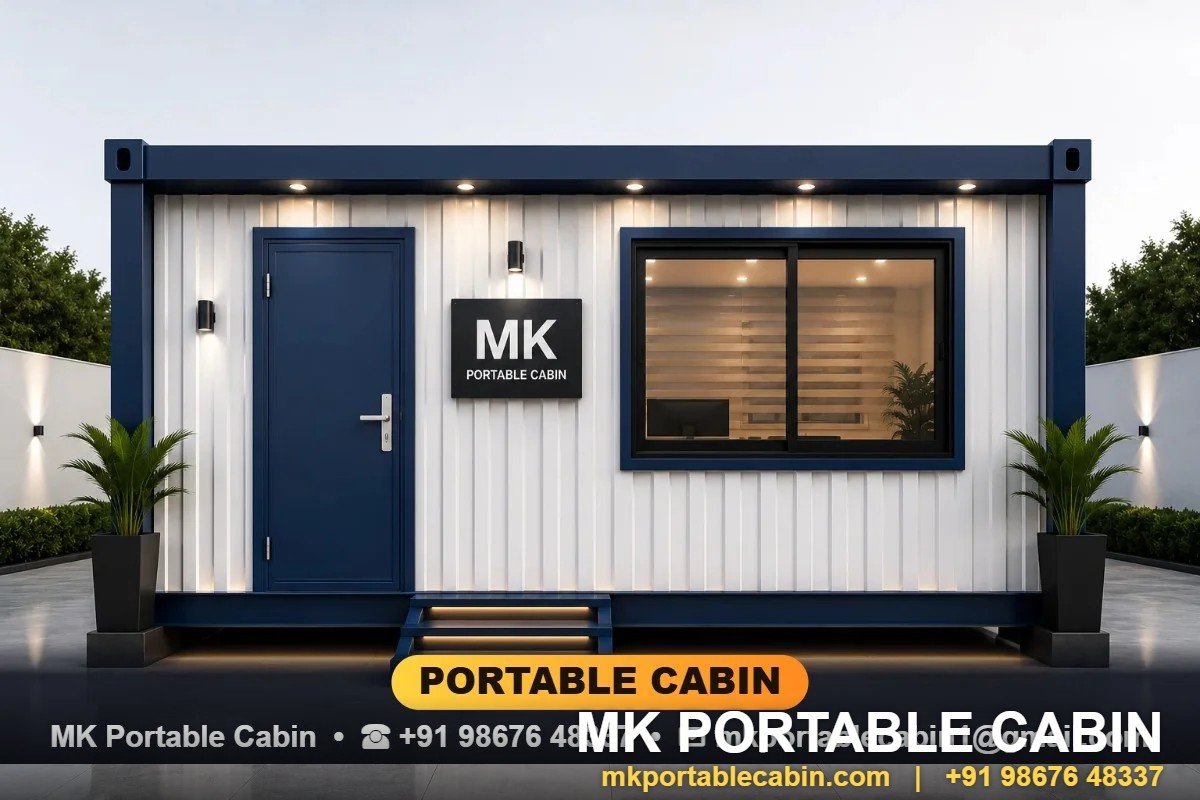
Types of Portable Cabins
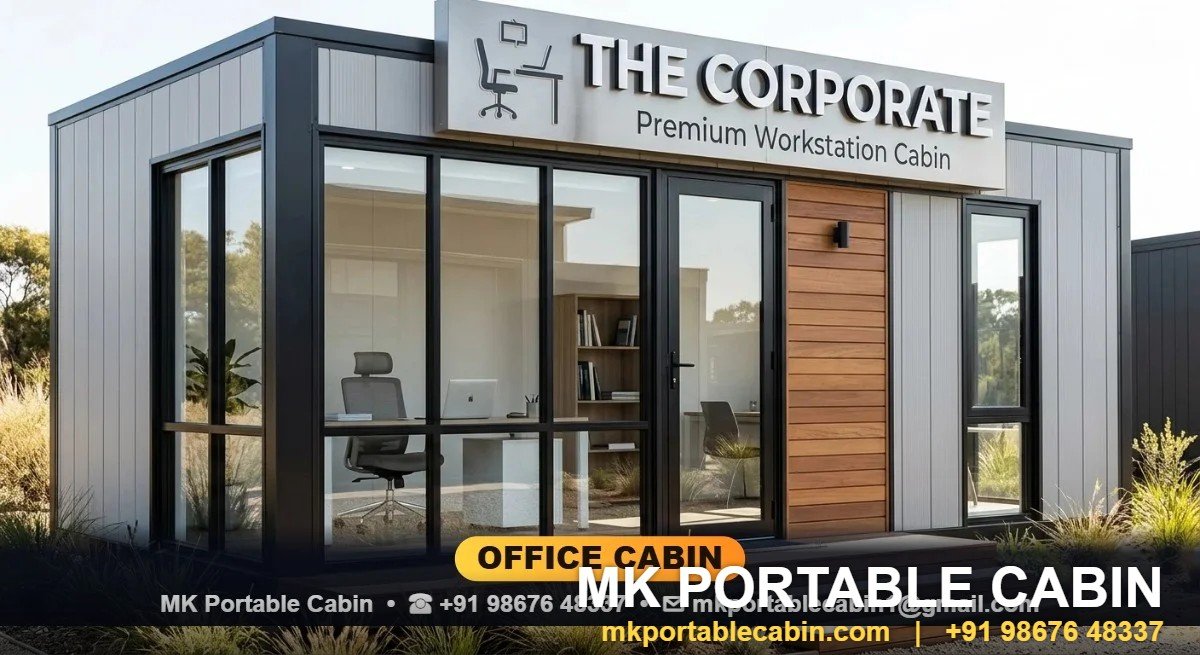
Office Cabins — The most common type, used as site offices, admin cabins, or temporary business premises. Available in various sizes (10×10, 20×10, 40×10 ft and custom dimensions) depending on how many people need to work inside.
Security Cabins — Compact cabins (commonly 4×4 or 6×6 ft) positioned at gates and entry points for security personnel, built for durability since they’re often used round the clock.
Labour Cabins / Bunk Houses — Accommodation units for workers at construction sites, balancing cost-efficiency with liveability — proper ventilation, insulation, and durability matter here more than anywhere else.
Portable Toilet & Bathroom Cabins — Essential sanitation units for construction sites, events, and remote locations, built with water-resistant materials and proper plumbing fixtures.
Conference & Modular Lab Cabins — Larger format cabins (40×10 ft and above) used for meeting rooms, training centres, or even modular laboratories on industrial sites.
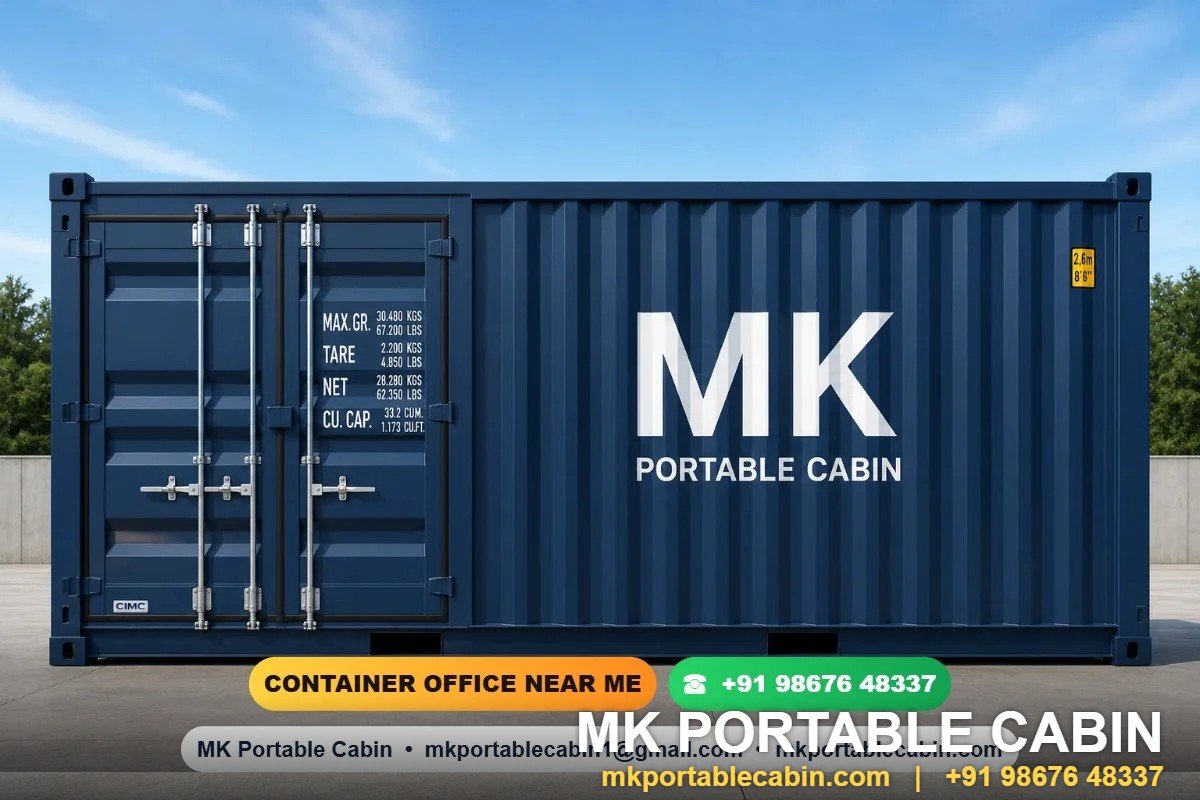
Shipping Container Cabins — Repurposed or custom-built container structures, popular for their strength and stackability when vertical space is at a premium.
What Actually Makes a Portable Cabin “Good”?
This is where most buyers get caught out — a cabin that looks fine in a photo can fall apart within a year if the underlying construction is weak. Here’s what to actually check:
The frame carries the entire structure. A solid cabin uses an MS (mild steel) box-section frame — commonly 4″x2″ sections for the base and 2″x2″ for the top — welded, not bolted, for long-term rigidity.
The wall panel is where quality varies the most. A proper sandwich panel construction uses GI (galvanized iron) sheet on the outside for weatherproofing, a layer of glass wool insulation in the middle for temperature control, and MDF ply (typically 8mm) on the inside for a finished look and added strength. Cabins that skip the insulation layer turn into ovens in summer and freeze in winter — a false economy that costs more in comfort and electricity later.
Doors, windows, and electricals should be counted and specified upfront — number of windows, type of modular switches, and whether AC/power points are pre-wired. This avoids surprise costs after delivery.
Weatherproofing matters enormously in India’s climate — monsoon-readiness (proper sealing, sloped roofing, rust-resistant fittings) shouldn’t be an afterthought, especially for coastal regions like Mumbai and Navi Mumbai.
How Much Does a Portable Cabin Cost?
Pricing depends on size, wall specification, number of windows/doors, electrical fittings, and any customization. As a rough guide, basic cabins start in the range of ₹50,000, while larger or more heavily fitted-out cabins (conference cabins, luxury glass-front cabins, larger office cabins) can go upward of ₹2,00,000+. The most reliable way to get an accurate number is a written quotation based on your exact size and specification — a manufacturer that gives you a firm number without knowing your requirements is one to be cautious of.
How to Choose a Portable Cabin Manufacturer: A Quick Checklist
- Ask for the exact wall panel specification (material, insulation, thickness) — don’t accept “durable” as an answer, ask for the layers.
- Check how many years they’ve been in business and ask for references or completed project examples.
- Confirm delivery timeline in writing, and what happens if specifications change mid-order.
- Clarify what’s included in the price — transportation, site installation, electrical connection — and what’s extra.
- Ask about after-sales support. Cabins get used hard on construction sites; a manufacturer who disappears after delivery is a risk.
Why Businesses Across India Choose MK Portable Cabin
At MK Portable Cabin, we’ve built and delivered portable cabins for over 10 years, serving 500+ clients across 100+ cities in India — from single security cabins to full site-office setups for large construction projects. Every cabin is custom-built to your size and specification, using GI sheet + glass wool + MDF ply sandwich panel construction and MS box-section framing, with a 3D design preview before manufacturing begins so you know exactly what you’re getting.
Whether you need a single 6×6 security cabin or a 40×10 conference cabin, our team based in Panvel, Navi Mumbai handles design, manufacturing, and pan-India delivery — so you can focus on your project, not your paperwork.
Need a cabin for your site? Get a free quote today — most quotations are ready within 24 hours.
Frequently Asked Questions
How long does it take to get a portable cabin delivered?
Most standard cabins are delivered within 12–15 working days from order confirmation, depending on size and customization.
Can portable cabins be customized in size?
Yes — while standard sizes like 10×10, 20×10, and 40×10 ft are common, cabins can be custom-built to fit your exact site requirements.
Are portable cabins suitable for long-term use, not just temporary sites?
Absolutely. With proper wall insulation (GI sheet + glass wool + MDF ply) and a rust-resistant steel frame, a well-built portable cabin can serve reliably for years, not just months.
Do portable cabins need a foundation?
Most portable cabins can be placed on a simple leveled base or plinth rather than a full foundation, which is part of why they’re faster to deploy than traditional construction. Site-specific requirements should be confirmed with your manufacturer.
What’s the difference between a portable cabin and a shipping container cabin?
A portable cabin is purpose-built from steel framing and panel walls, generally lighter and more customizable in layout. A shipping container cabin repurposes or replicates a container’s structure — stronger for stacking but less flexible on interior layout.
One Response