Buyers who call us usually start with the same question: should I take a container cabin or a portable cabin? Both give you a ready-made room you can drop on site, but they are built differently, they behave differently in Mumbai weather, and they suit different budgets. Here is a clear comparison so you can decide before you ask for a quote.
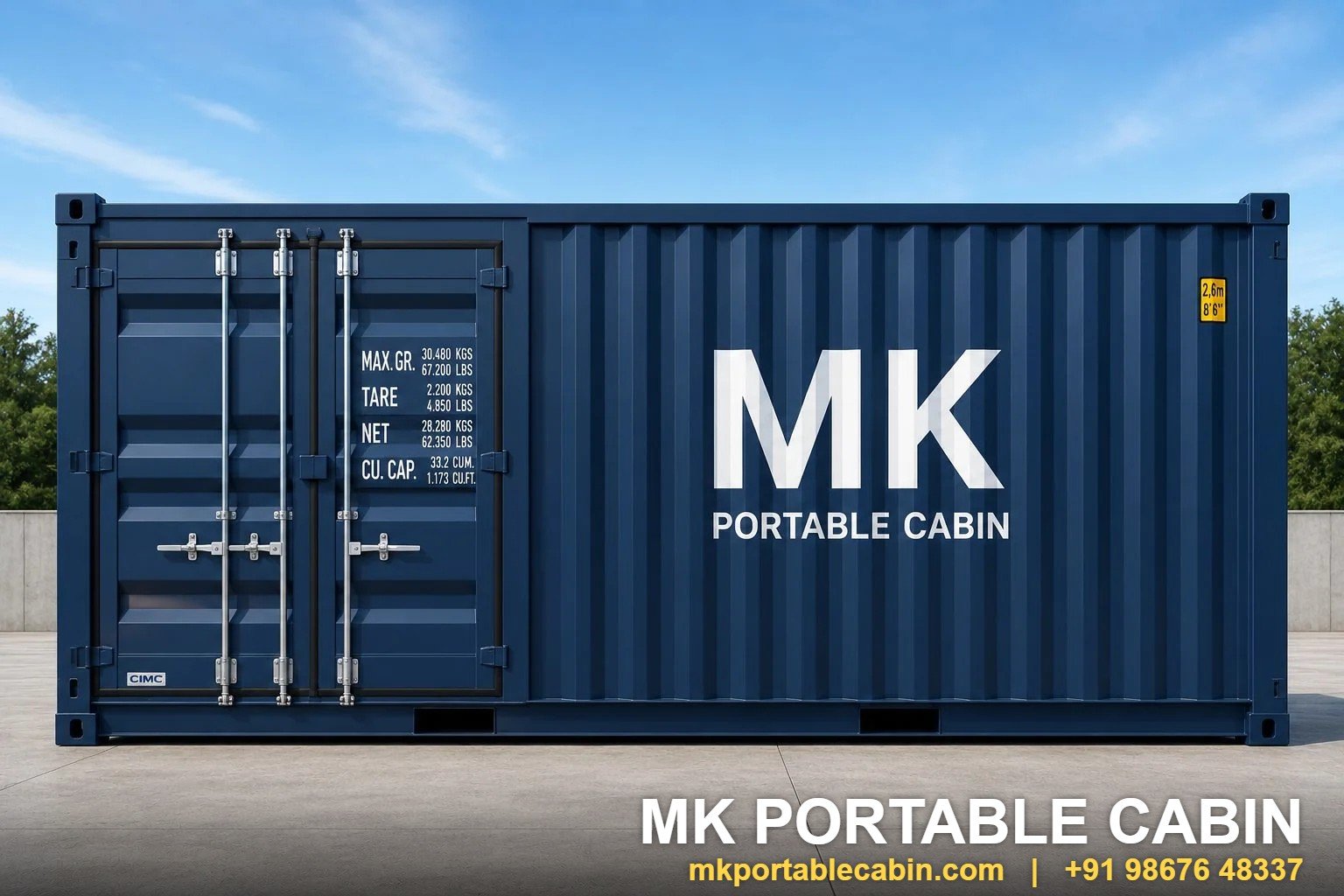
What is a container cabin?
A container cabin is built on a shipping-container shell – a welded steel box with a corrugated body, a heavy steel floor frame and corner castings. It may be a genuine used shipping container that has been converted, or a new container-style body fabricated to the same dimensions. Because the structure is load-bearing steel, a container cabin is extremely strong, stackable, and can be lifted by crane repeatedly without losing shape.
What is a portable cabin?
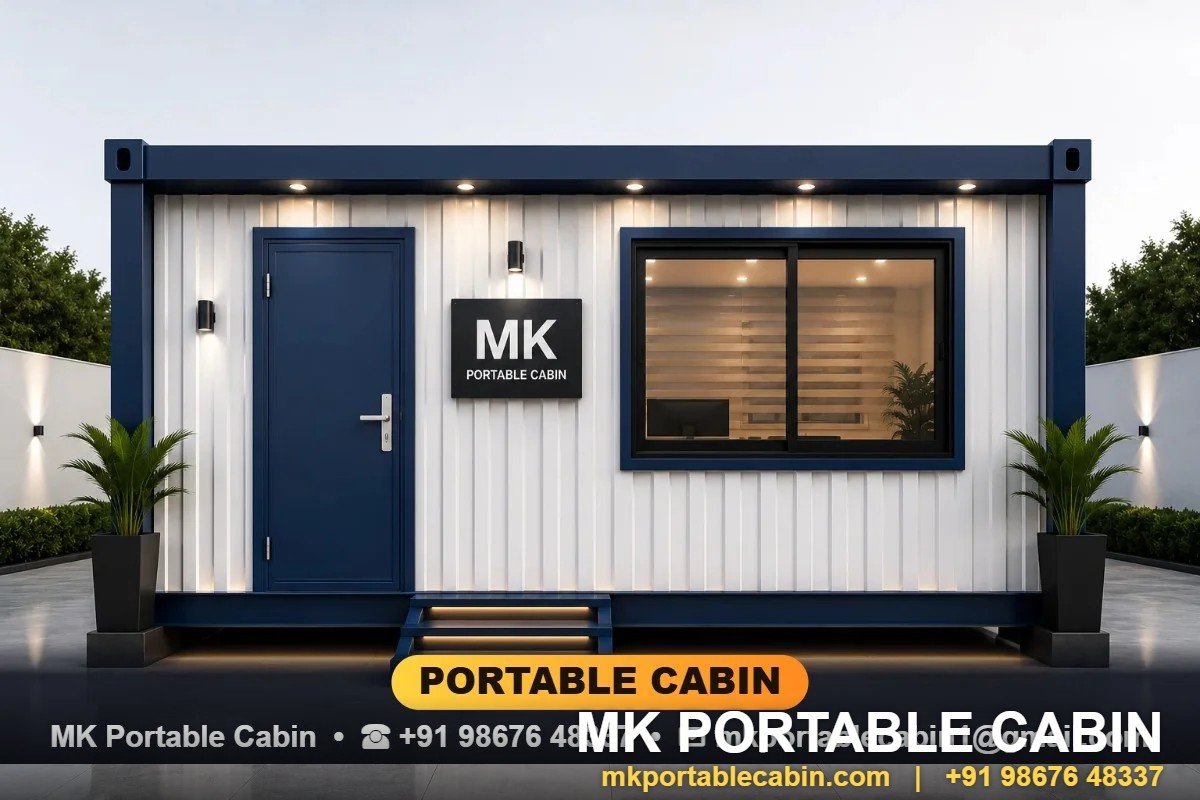
A portable cabin is built as a frame-and-panel structure: an MS or GI steel frame with pre-insulated sandwich panels (PUF or EPS) fixed as walls and roof. The panel does the insulating job, so the cabin stays noticeably cooler than a bare steel box. The whole unit is lighter, which makes transport cheaper and installation faster.
Head-to-head comparison
1. Structure and strength
Container cabin wins on raw strength. If the unit will be stacked two or three high, shifted by crane every few months, or used in a heavy industrial yard, container construction handles the abuse better. A portable cabin is strong enough for normal use but is not designed for repeated stacking.
2. Heat and insulation
Portable cabin wins clearly. A PUF sandwich panel wall blocks far more heat than a single sheet of corrugated steel. An un-insulated container gets very hot in the Mumbai and Navi Mumbai summer – which is why container cabins meant for people to sit in are almost always lined with insulation and an inner sheet, adding cost. If you are buying an office, security post or any cabin where staff will sit all day, insulation is not optional.
3. Size flexibility
Container cabins follow standard shipping sizes – broadly 10 ft, 20 ft and 40 ft lengths at a fixed width. Portable cabins are fabricated to order, so you can ask for a width or length that actually matches your plot, your door positions and your window layout.
4. Mobility and transport
Container units are heavier, so lifting and transport cost more and you need proper crane access. Portable cabins are lighter and, in larger sizes, can be supplied in knock-down form and assembled on site – useful when the approach road is narrow.
5. Lifespan and maintenance
Both last for years when they are looked after. Container bodies need regular anti-rust painting, especially at welds and the floor frame. Portable cabins need their panel joints, sealants and roof fasteners checked. In a coastal, salty environment like Mumbai, painting and sealing discipline matters more than the cabin type.
6. Look and finish
If the cabin faces customers – a site sales office, a shop cabin, a reception – the clean flat surface of a portable cabin usually photographs and finishes better. Container cabins carry that industrial corrugated look, which some brands actually want.
Which one should you choose?
- Choose a container cabin if you need maximum structural strength, stacking, frequent crane movement, secure storage, or a deliberately industrial look.
- Choose a portable cabin if the unit is for people – site office, security cabin, shop cabin, staff room, clinic – and comfort, insulation and custom sizing matter more than raw steel strength.
A common middle path
Many sites end up using both: container cabins for stores and tool rooms where strength and security count, and insulated portable cabins for the site office and security post where people actually sit. That combination usually gives the best value over a two-to-three-year project.
Before you order, check these
- Panel type and thickness – PUF or EPS, and how many millimetres.
- Frame section – what steel section and gauge the frame uses.
- Flooring – plywood, cement board or chequered plate, and what goes under it.
- Electricals – how many points, whether wiring is concealed, and whether an AC point is provided.
- Delivery and unloading – who arranges the crane or hydra, and whether that is in the quoted price.
- Warranty – what is covered and for how long.
Get a size-specific quote
The honest answer to “which is cheaper” depends on the exact size, panel specification, finishing level and delivery distance – so any number quoted without those details is guesswork. Tell us the size you need, where the site is and what the cabin will be used for, and we will send a written quote for both options so you can compare like for like.
MK Portable Cabin manufactures portable office cabins, security cabins, site cabins, shop cabins, container cabins and portable toilets from our unit in Mumbra, Thane, with delivery across Mumbai, Navi Mumbai, Thane and the rest of India. Call +91 98676 48337 or request a free quote.
Also read: Buy used shipping container offices — how we cut and convert second-hand containers into site offices.